

The year 2026 marks a revolutionary shift in software development. AI coding has evolved from simple autocomplete tools to fully autonomous agentic frameworks that can handle complex, multi-step development tasks with minimal human intervention. Leading tech giants—Anthropic, OpenAI, and Google—have introduced groundbreaking features that are reshaping how we write, debug, and deploy code.
The Rise of Agentic AI in Software Development
Unlike traditional AI assistants that respond to prompts, agentic AI frameworks can autonomously execute tasks across the entire software development lifecycle. These systems can write features, answer questions about codebases, fix bugs, and even propose pull requests for review—all while maintaining persistent memory and context across sessions.
According to recent market analysis, Anthropic leads with 41% market confidence for the best AI coding model in early 2026, followed by OpenAI at 33%, with Google trailing in third position.
Anthropic’s MCP: The Universal Integration Standard
Model Context Protocol (MCP)
The most significant innovation from Anthropic in 2026 is the Model Context Protocol (MCP)—an open standard that enables AI agents to connect with external tools and data sources seamlessly. Released in late 2024, MCP has become the foundation for building production-grade AI applications.

Key MCP Features:
- Universal connectivity to hundreds of external tools and services
- Bidirectional data flow between AI agents and external systems
- Secure, two-way connections for enterprise environments
- Tool discovery and execution for real-world coding actions
Claude Code: Autonomous Coding Excellence
Claude Code has emerged as the gold standard for autonomous coding in 2026. Engineering teams have discovered that Claude can program autonomously for over 30 hours without performance degradation, handling entire implementation workflows including:
- Writing comprehensive tests
- Debugging failures independently
- Generating production-ready code
- Managing complete development lifecycles
Claude Opus 4.5: Enhanced Capabilities
The latest Claude Opus 4.5 release brings significant improvements in:
- Coding performance and accuracy
- Agentic workflow orchestration
- Enhanced safety features
- Developer tool integration
OpenAI’s Evolution: Agentic Memory and Beyond
Agentic Memory for GitHub Copilot
In a groundbreaking January 2026 update, GitHub Copilot introduced agentic memory—now in public preview. This feature automatically captures repository-specific insights called “memories” that persist across sessions, transforming how developers work with AI assistants.
Key Benefits:
- Repository-specific context retention
- Cross-session memory for consistent assistance
- Automatic insight capture during development
- Seamless integration with existing workflows
OpenAI Agentic AI Foundation
OpenAI co-founded the Agentic AI Foundation in December 2025, establishing simple, interoperable standards for AI coding agents. This initiative focuses on standardizing how AI agents operate autonomously in development environments.
Codex Evolution: From Assistant to Orchestrator
OpenAI’s Codex has evolved dramatically:
- Proposes pull requests for code review
- Answers complex questions about entire codebases
- Writes complete features autonomously
- Fixes bugs with minimal human guidance
- Mobile-initiated tasks through ChatGPT integration
The industry is witnessing a fundamental shift from “conductors” (human-directed) to “orchestrators” (AI-directed) development models.
Google’s Gemini 3: Multimodal Reasoning Powerhouse
Gemini 3 Pro: Next-Generation Capabilities
Google’s Gemini 3 Pro Preview, introduced in November 2025, brings advanced agentic coding capabilities to the table:
Standout Features:
- Advanced reasoning for complex development tasks
- Sophisticated tool use for real-world coding actions
- Agentic coding capabilities for autonomous workflows
- Day 0 support for the latest open-source frameworks
- Multimodal reasoning for comprehensive analysis
Agent Mode and Gemini CLI
Google’s Agent Mode (currently in preview) gives Gemini access to built-in system tools, enabling it to perform a wide range of software development tasks. The Gemini CLI has emerged as one of the top CLI coding agents in 2026, known for:
- Fast feedback loops
- Strong performance across languages
- Clean terminal integration
- Production-grade reliability
Comparative Analysis: The 2026 Landscape

Market Position and Strengths
| Framework | Market Share | Key Strength | Best For |
|---|---|---|---|
| Claude Code | 41% | Autonomous workflows, long-running tasks | Complex feature implementation |
| GitHub Copilot | 33% | IDE integration, agentic memory | Daily development workflow |
| Gemini Code Assist | Third | Multimodal reasoning, open-source support | Enterprise applications |
Strategic Divergence
The “Big Three” have taken distinctly different paths in 2026:
- Anthropic: Leading in coding-specific AI with focus on autonomous software development
- OpenAI: Maintaining strong presence through GitHub Copilot integration and broader ecosystem
- Google: Focusing on enterprise LLM platforms and general AI automation
The Future: Autonomous Development Workflows
Cloud-First Agentic Platforms
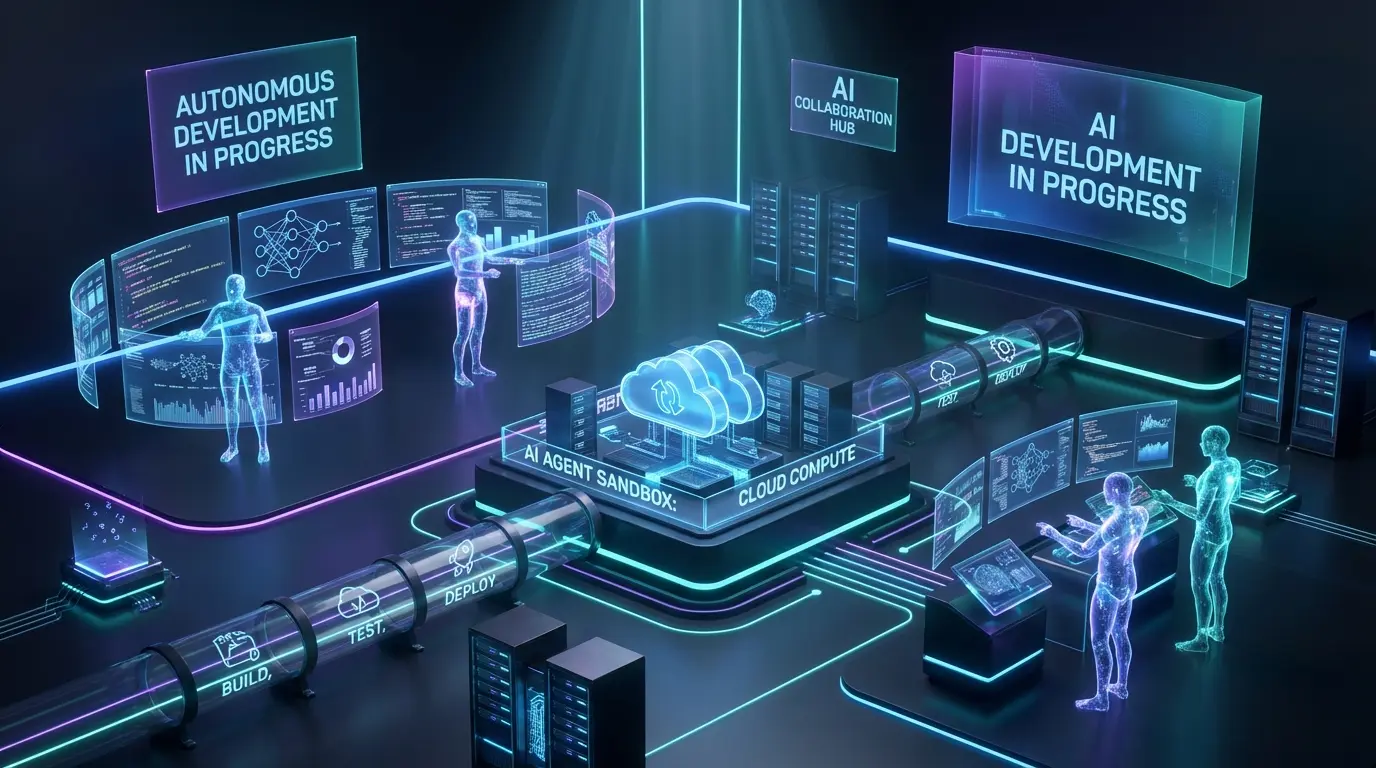
2026 introduces platforms that run tasks in isolated sandboxes:
- Anthropic Cowork
- OpenAI Dev Engine
- Google Jules
These platforms allow developers to queue work, walk away, and return to completed tasks—a fundamental shift in how we approach software development.
Multi-Step Agentic Workflows
The most significant trend of 2026 is the emergence of multi-step agentic features that reshape how enterprises build production AI systems:
- Dynamic tool discovery for real-time action execution
- Third-party app integration (Asana, Figma, Slack, Canva) running directly inside AI interfaces
- Persistent context management across development sessions
- Advanced error recovery and self-healing capabilities
What This Means for Developers
The New Development Paradigm
The shift to agentic AI frameworks represents more than just improved tools—it’s a fundamental reimagining of software development:
From Manual to Autonomous:
- Testing: AI writes comprehensive test suites automatically
- Debugging: Agents identify and fix bugs independently
- Documentation: Code documentation generates itself
- Review: AI performs code reviews and suggests improvements
From Single-File to Full-Stack:
- Feature development: End-to-end implementation by AI agents
- Integration: API connections established autonomously
- Deployment: CI/CD pipelines managed by agentic systems
Skills for the AI-Augmented Developer
As these frameworks mature, developers need to adapt:
- AI orchestration — Managing and directing AI agent workflows
- Architecture design — Designing systems optimized for AI collaboration
- Quality validation — Ensuring AI-generated code meets standards
- Strategic decision-making — Focusing on high-level problem solving
Conclusion: The Agentic Revolution Is Here
The innovations of 2026 from Anthropic, OpenAI, and Google represent more than incremental improvements—they mark the beginning of a new era in software development. With Model Context Protocol standardizing integrations, agentic memory providing persistent context, and autonomous agents handling complex workflows, the future of coding has arrived.
For developers and organizations, the message is clear: the time to embrace agentic AI frameworks is now. Those who adapt will find themselves empowered to build faster, iterate more efficiently, and focus on the creative aspects of software development while AI handles the routine.
Sources
- Anthropic - Code Execution with MCP
- Claude Code MCP Documentation
- Anthropic - Model Context Protocol Announcement
- GitHub Blog - Agentic Memory Preview
- OpenAI - Agentic AI Foundation
- GitHub Copilot Agents Concepts
- Google Gemini Code Assist Overview
- Building AI Agents with Gemini 3
- Gemini Agent Mode Documentation
- 2026 Agentic Coding Trends Report - Anthropic
- The Agentic Coding Landscape in 2026 - Medium
- Top AI Coding Agents 2026 - Cloudelligent
- Best AI Model for Coding 2025-2026 - Zoer.ai
- A Developer’s Guide to Agentic Frameworks in 2026 - Towards AI
- Microsoft Agent Framework Overview
- Cursor AI Review 2026 - Prismic
